
Safety Guide · Plain English
The Playground Safety Guide
Space, surfacing, swings and inspections explained simply, using guidance from the U.S. Consumer Product Safety Commission.
Call us today833-353-PLAY- Splinter-free vinyl
- Residential & commercial
- Professional installation
- Safety-first planning
- Colors you choose
- Nationwide
Four Numbers
What Every Owner Should Know
These come straight from the CPSC’s Outdoor Home Playground Safety Handbook (Publication 324).
Space around the equipment
The CPSC advises at least 6 feet from structures and obstacles such as a house, fence, shed or tree.
Swing clearance
In front of and behind swings, allow a distance equal to twice the height of the top bar.
Loose-fill depth
Maintain at least 9 inches of wood mulch, engineered wood fiber or shredded rubber for equipment up to 8 feet high.
Surfacing beyond the edge
Protective surfacing should extend at least 6 feet beyond the perimeter of the play structure.
Source: U.S. Consumer Product Safety Commission, Outdoor Home Playground Safety Handbook (Pub. 324). Follow your manufacturer’s instructions and any local rules.
Surfacing
The Ground Is Part of the Playset
About 80% of home playground injuries happen when children fall from equipment, according to the CPSC, which is why protective surfacing is one of the most important parts of any plan.
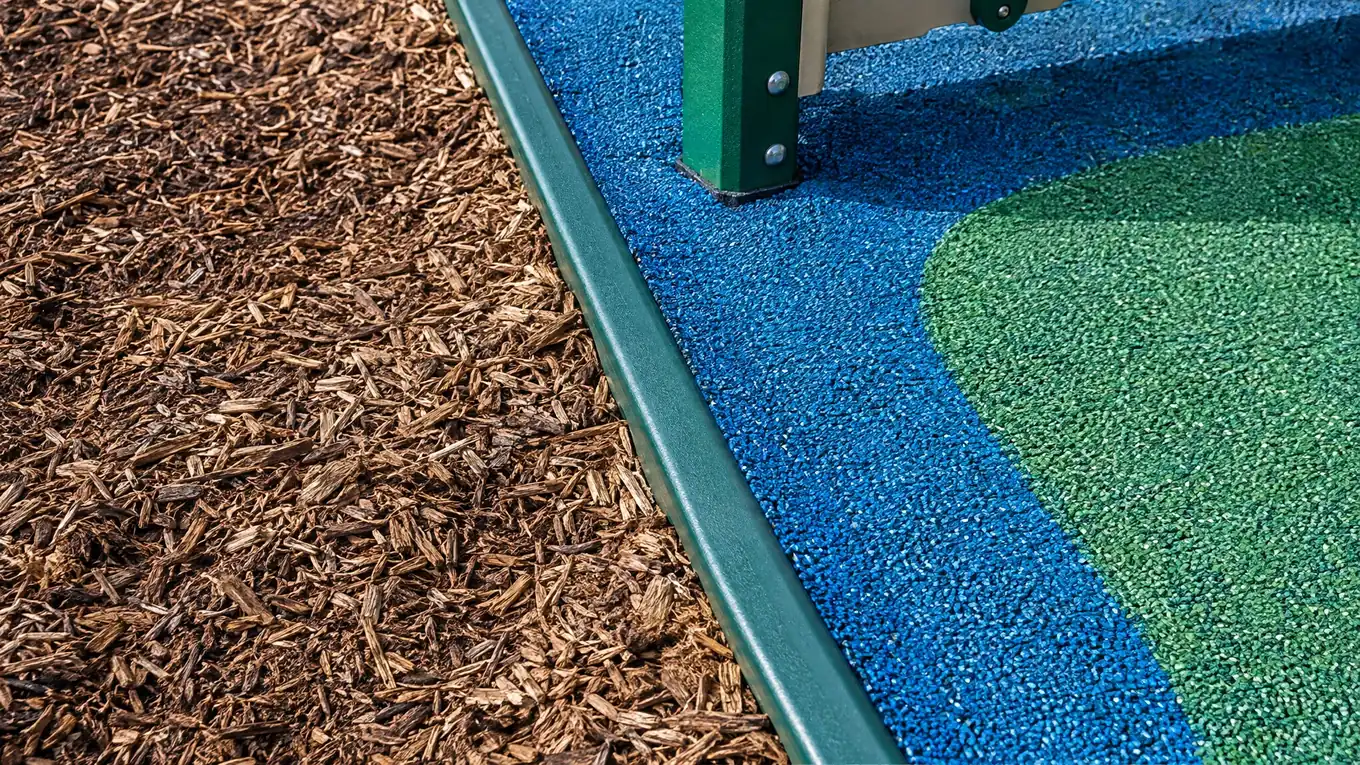
For loose fill such as wood mulch, engineered wood fiber or shredded rubber, the CPSC advises a minimum depth of 9 inches for equipment up to 8 feet high, and 9 inches of sand or pea gravel for equipment up to 5 feet high. An initial fill of 12 inches settles to about 9 inches, so top it off over time. Equipment with no elevated play surface, such as a sandbox or an activity wall, does not need protective surfacing.
Free Interactive Tool
Turn the Guidance Into Cubic Yards
Inspection Day
Check It Like a Pro
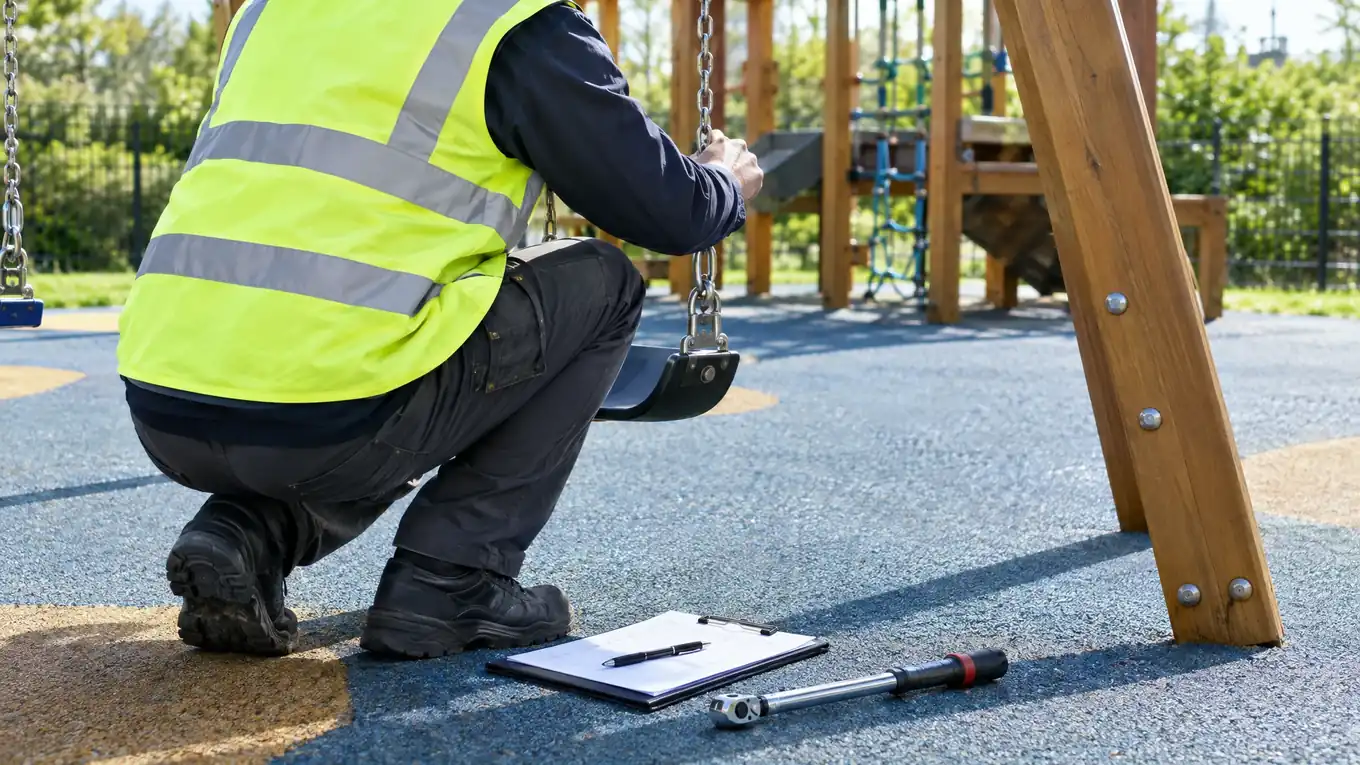
Print it, tick it, keep it. The CPSC suggests checking nuts and bolts twice a month, swing seats, ropes and chains monthly, and watching for wear, rust and splintering.
Standards
ASTM, CPSC and What They Mean
ASTM F1148 covers home playground equipment and ASTM F1487 covers playground equipment for public use. The CPSC publishes handbooks for both: the Outdoor Home Playground Safety Handbook (Publication 324) and the Public Playground Safety Handbook (Publication 325).
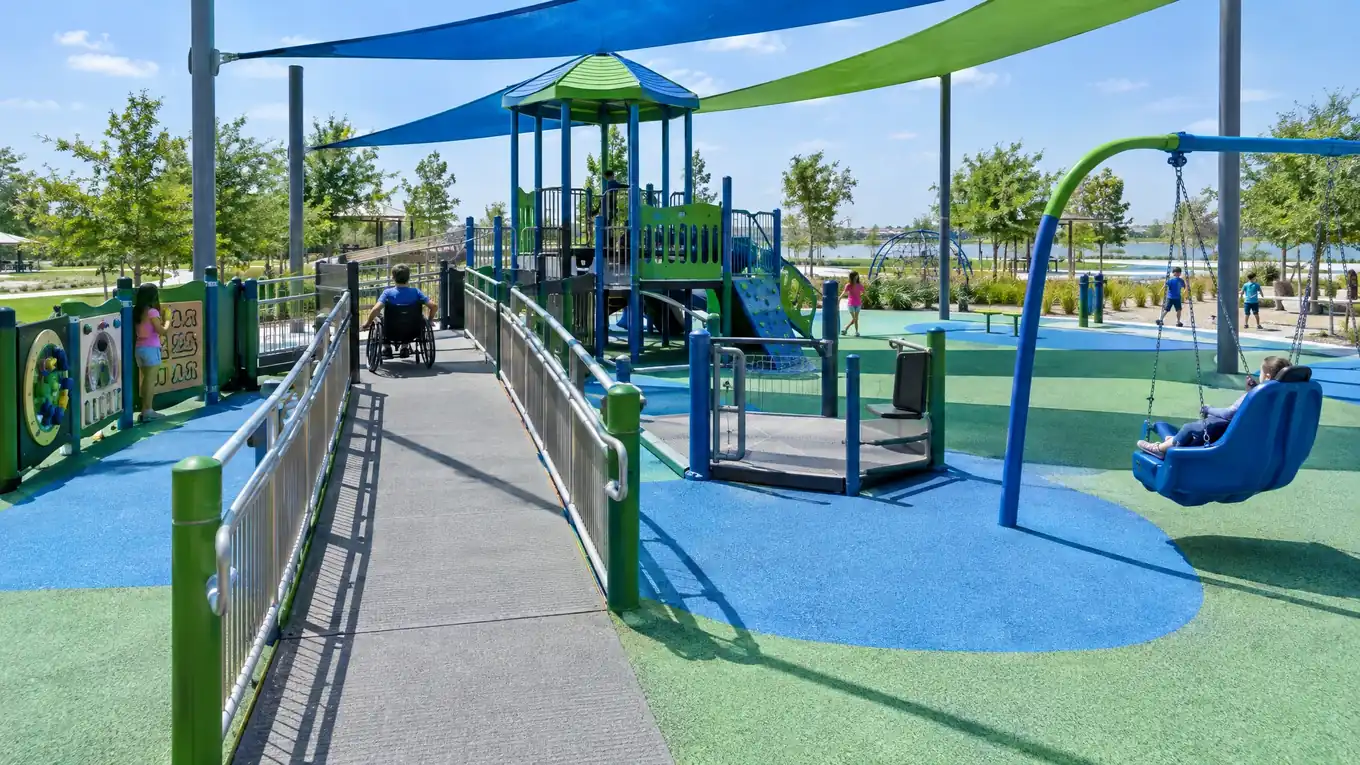
Accessibility requirements, including the ADA, depend on the site and the jurisdiction. Ask us for documentation on the model you are considering, and we will plan the details with you.
How deep should the mulch be?
The CPSC advises at least 9 inches of compressed loose-fill surfacing for equipment up to 8 feet high. An initial fill of 12 inches settles to about 9. Our Surfacing Calculator does the math.
Do I need surfacing under a playset?
Equipment with an elevated play surface needs protective surfacing. The CPSC says equipment with no elevated surface, like a sandbox or activity wall, does not.
How often should I inspect the playset?
The CPSC suggests checking nuts and bolts twice a month and swing seats, ropes and chains monthly. Try our Safety Checklist.
What safety standards do you follow?
Home playsets are commonly designed around ASTM F1148 and the CPSC’s home playground guidance, and public playgrounds around ASTM F1487 and the CPSC Public Playground Safety Handbook. Ask us for documentation on the model you choose.
Free Quote
Let’s Build Something Amazing
Tell us about your yard or site and the kids who will play there. We will send a free quote. Or call now and talk to a playground specialist.
- Residential, school, church and community playgrounds nationwide
- Fast, free shipping anywhere in the USA
Get Your Free Quote

Playset Kingdom designs, delivers and installs custom vinyl playsets and commercial playgrounds for homes, schools, churches and communities across the United States.
Call us today833-353-PLAY- Serving families and communities nationwide